
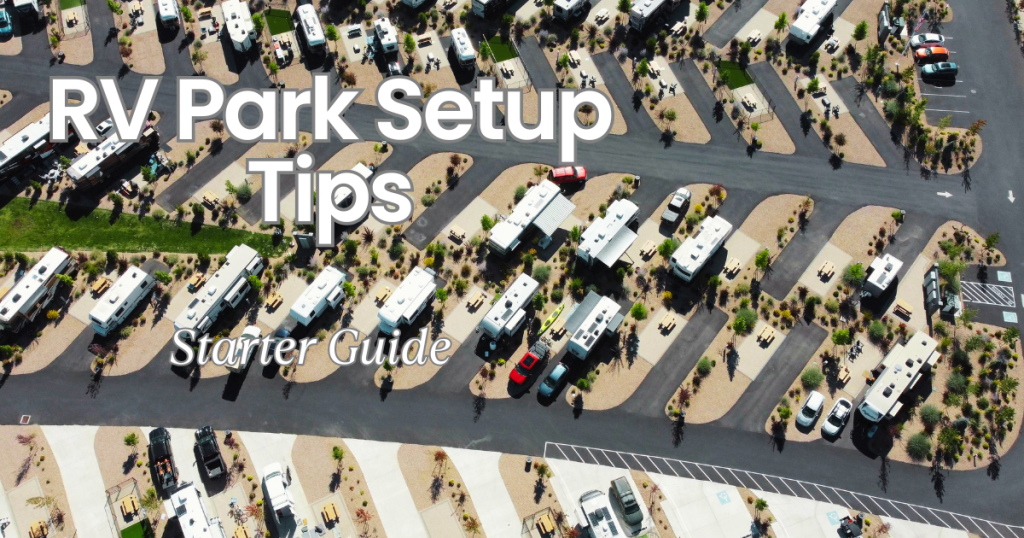
Beginner RV Park Setup Checklist: How to Set Up Your Rig at a New RV Park
Pulling into a new RV park should feel exciting. For newer RV users, though, it can also feel a little stressful. You finally arrive, everybody is ready to get out, and now it is time to level, hook up, and get settled without missing an important step.
The good news is that RV setup gets easier with practice.
A simple routine helps a lot. When you follow the same order each time, setup feels less rushed and much more manageable. That is especially true for families, where a little structure can make the whole arrival process calmer and smoother.
This beginner RV park setup checklist will walk you through the process step by step. It is practical, easy to skim, and designed to help newer RV users feel more confident from the moment they pull into their site.
Before You Pull Into Your Site
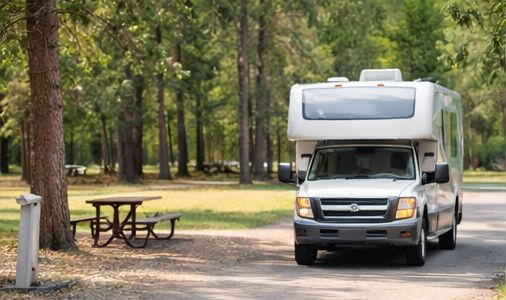
If the RV park has an office, check in first. Review any rules, quiet hours, pet policies, fire rules, or site details. Then drive slowly to your site and take a quick look around before you commit to your final position.
This small pause can save time and frustration later.
Step 1: Check the Site Before You Commit
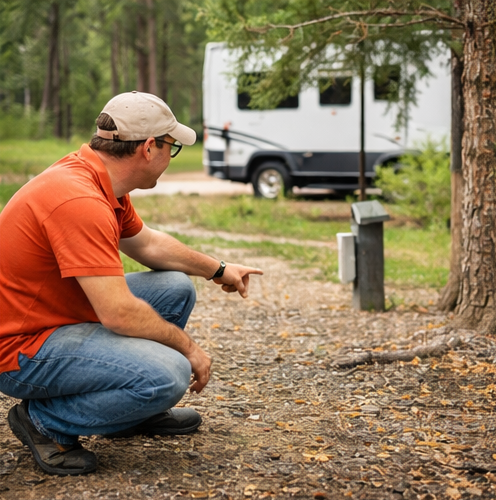
Before backing in or pulling through, get out and inspect the site.
Look for a few basics:
- Is the site fairly level?
- Where are the hookups?
- Will your water hose, power cord, and sewer hose reach?
- Are there low branches, posts, rocks, or picnic tables in the way?
- Is there enough room for your slide-outs and awning?
- Will your outdoor seating area fit where you want it?
A one-minute walkthrough can help you avoid having to reposition the RV later.
Step 2: Position Your RV the Smart Way
Take your time getting into the site.
If you are traveling with family, keep the process simple. One person can help guide the driver. Another can keep an eye on kids or pets. Too many people giving directions at once usually creates confusion.
Try to position the rig with a little planning in mind:
- Keep the hookup side close enough to utilities
- Leave enough room for slide-outs
- Make sure the entry door opens comfortably
- Think about where your awning will extend
- Leave yourself a usable outdoor living space
It does not need to be perfect, but smart positioning makes everything else easier.
Step 3: Secure and Level Your Rig
 Once you are in place, secure the RV before moving on.
A good basic order is:
Chock the wheels
This should happen early. It helps keep the RV from shifting and is an easy safety habit to build.
Level side to side
If the site is uneven, use leveling blocks before finalizing your setup.
Unhook if towing
If you have a travel trailer or fifth wheel, disconnect only after the trailer is secure and in the right position.
Level front to back
Use your tongue jack or leveling system to get the RV level.
Lower the stabilizers
Stabilizers help reduce bounce and movement, but they are not meant to do the main leveling work.
A level RV is more comfortable, works better, and feels much more settled once you are inside.
Step 4: Connect Power, Water, and Sewer in the Right Order
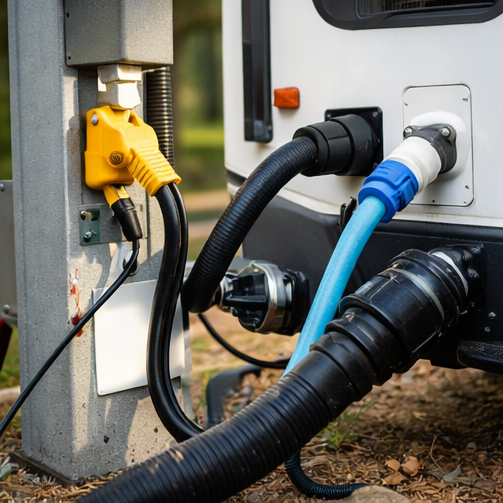 This is the part that can make new RV users nervous, but it gets much easier once you follow the same routine every time.
Connect power
Start with power so you can run lights, air conditioning, or other basics if needed.
A simple routine looks like this:
- Check the pedestal
- Turn the breaker off
- Plug in your surge protector
- Connect your power cord
- Turn the breaker on
Connect water
Next, connect your fresh water setup.
That usually includes:
- water pressure regulator
- water filter if you use one
- drinking water hose
Once connected, turn on the water and check for leaks.
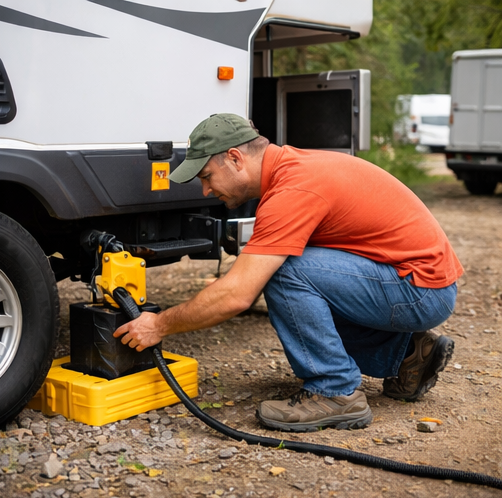
Connect sewer if needed
If you are at a full-hookup site, you may want to connect your sewer hose during setup. Keep the black tank valve closed until it is time to dump. That habit usually helps prevent tank issues and keeps things cleaner.
For newer RV users, simple and consistent is the goal.
Step 5: Set Up the Inside for Comfort
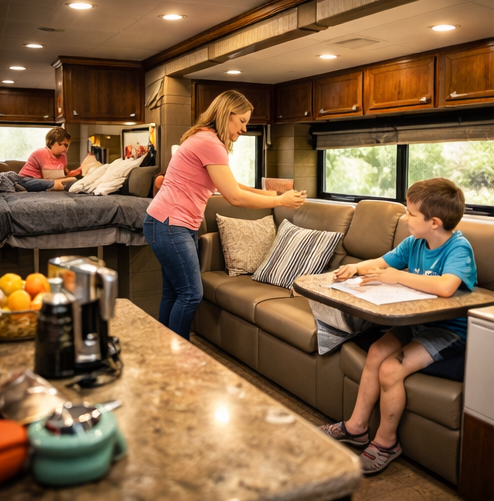 After the main hookups are done, head inside and make the RV livable.
You might:
- extend the slide-outs after checking clearance
- turn on the refrigerator if needed
- set the temperature
- put food where it belongs
- make beds or organize bunk areas
- set out toiletries and daily-use items
- plug in chargers and electronics
If you have children, this is a good time to give everyone one easy job. One child can place pillows. Another can put shoes near the door. Another can help organize snacks. Small routines make family RV travel feel smoother.
Step 6: Set Up the Outside Without Overdoing It
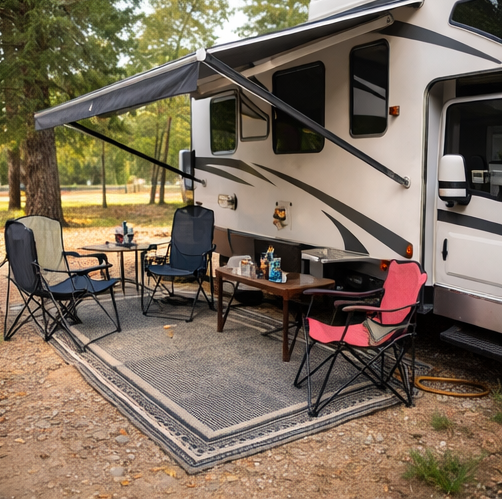 This is where the campsite starts to feel like home.
Set up the basics first:
- entry mat
- folding chairs
- small outdoor table
- trash container
- grill or cooking area if needed
- outdoor rug if you use one
Then stop and ask yourself how much you really need to set out.
For short stays, simpler is usually better. Less setup means less cleanup later. It also helps you stay flexible if the weather changes.
A Simple RV Setup Tool Kit to Pack
A small RV setup tool kit can make a big difference, especially for newer RV users.
Here are some recommendations for products that fit the core tool kit for trips:
Core setup gear
- leveling blocks
- wheel chocks
- surge protector
- water pressure regulator
- drinking water hose
- sewer hose support
- disposable gloves
- flashlight or headlamp
- basic tool kit with screwdriver, pliers, and wrench
- tire pressure gauge
- extra fuses
- extension cord or dogbone adapter
Helpful family extras
- outdoor mat
- folding chairs
- lantern
- paper towels
- sanitizing wipes
- bug spray
- power bank
- a dedicated tote for setup gear
Common RV Park Setup Mistakes to Avoid
A few common mistakes can make setup more frustrating than it needs to be.
Rushing the parking process
Taking an extra minute at the start often saves ten minutes later.
Not checking site slope first
A quick site check can help you avoid awkward repositioning.
Extending slide-outs too soon
Always check clearance before opening slides.
Skipping wheel chocks
That is one of the easiest mistakes to avoid.
Hooking up water without a regulator
Water pressure can be stronger than expected at some parks.
Leaving the black tank valve open
Keeping it closed until it is time to dump is usually the better habit.
Setting up too much outside gear
A simple campsite is often easier to manage, especially for one-night or short stays.
Camper Bob’s Quick Setup Routine for Families
If you want one easy reminder, think like this:
Park. Check. Chock. Level. Hook up. Settle in.
That one short line covers the basics.
A family-friendly arrival routine could look like this:
- One adult checks the site
- One adult guides the rig into position
- Chock and level the RV
- Connect power and water
- Set up the inside basics
- Put out the chairs and relax
You do not need a perfect setup. You just need a repeatable one.
FAQs About Beginner RV Park Setup
1. What is the first thing to do when you arrive at an RV park?
The first thing to do is check in if needed, review any campground rules, and inspect your site before parking. That gives you a chance to look for hookup placement, obstacles, slope, and slide-out clearance before you settle into position.
2. Do I level my RV before hooking up utilities?
Yes, in most cases it is best to secure and level your RV before finishing your hookups. A level rig is more comfortable, helps appliances work properly, and makes the rest of the setup process easier.
3. What RV gear is most important for beginner campground setup?
The most useful beginner setup gear usually includes leveling blocks, wheel chocks, a surge protector, a water pressure regulator, a drinking water hose, a sewer hose, a flashlight, and a small tool kit. Those basics cover most campground setup needs.
4. Should I leave my black tank valve open at a full-hookup site?
Usually no. It is generally better to keep the black tank valve closed until it is time to dump the tank. That helps waste move through the system more effectively and can reduce messy tank problems.
5. How can families make RV setup easier with kids?
Families can make setup easier by creating a simple routine and giving each child one small job. When everyone knows what to do, arrival feels more organized and less stressful.
Final Thoughts on RV Park Setup
Setting up your rig at a new RV park does not have to feel overwhelming. A simple beginner RV park setup checklist helps you follow a steady process every time you arrive. Check the site, position the rig carefully, secure and level it, connect the basics, and then settle in.
That simple routine can help new RV users build confidence quickly.
Before long, setup starts to feel less like a challenge and more like the first step in a good trip.
Helpful Next Steps
Save this checklist and keep a copy in your RV so it is easy to follow on every trip. If you are building out your travel routines, take a look at more Camper Bob content for RV gear, family travel tips, campground advice, and practical ideas that make the road feel easier.


0 Comments